In Las Vegas When I was Growing Up

…and now for a brief diversion from The Great France Art Tour of 2017…

Trinity detonation tb.

In Las Vegas when I was growing up, the Atomic Energy Commission was always blowing up the desert with underground nuclear blasts that would roll through town at dinnertime, making you feel a little dizzy, until you’d see the chandelier slowly swinging and remember, oh yeah, bomb today.

And the mob was always blowing up somebody–generally a competitor or someone that wasn’t playing by their rules I guess. They’d blow up cars, or a motel, maybe a house. But I didn’t know much about that or pay much attention to it.

Then there were the planes. There was the military plane that famously crashed into Mount Charleston. And the small one that blew up in the desert way out past Rainbow Road on the way to Red Rock.  Where we used to hike, looking for rattlesnakes and Collared Lizards. It was pretty eerie out there, tiny little dime sized pieces of aluminum sheet metal, sometimes bigger, with rivets, scattered across the desert when you stood in the middle of it crunching under your feet and visible as far as you could see in any direction. Sometimes we’d find something bigger, like a wing strut or a piece of landing gear, once, even a briefcase, but it was warped and sunbaked, and if it ever had anything interesting in it, it was long gone. Pretty much all that was left out there was tiny little pieces. It must’ve been some explosion.

Seemed like things were always getting blown up in Las Vegas. Pet World, the store where I bought mealworms to feed my lizards and worked briefly, cleaning dog cages and aquariums, went up in a weekend fireball supposedly from a gas leak, although I had my suspicions. Two goldfish survived.

There were blasting caps at the construction sites, which were all over town, and ads on all of the daytime TV shows warning kids not to touch them or pick them up, which made kids really want to find one, and kids always getting blown up when they did.

And fireworks of course. Cherry bombs and M-80s and kids blowing off their fingers when they tried to throw an M-80. Whoops. It went off too soon.  Like that kid Ken Revis who only had four fingers on one hand. In high school he showed me the photo he always carried in his wallet. A Polaroid of his bloody hand spread out on the  surface of a table and the blown off middle finger on the table separated from its previous home by about 4 inches. Why did he always keep that picture? Did his dad make him keep it, to torture him for the rest of his life? He smoked a lot of dope that guy. He smoked more dope, more dope than anybody I’ve ever known.

I wonder if he is still alive.  I wonder if he still has that picture in his wallet.

If I were him, and I was still alive, and I still had that picture in my wallet, I’d blow up that picture.

—Christo

At Last Monet

🇫🇷 The Great France Art Tour of 2017

MusĂŠe Marmotan Monet, 2, Rue Louis Boilly, Paris

IMG_3521

I was there, at last. Standing in front of Monet’s finished “Impression Sunrise”.  This was after all, the painting that started it. The seminal work of Impressionism and much of what followed.

I had after all, painted it. I was, after so many years, pleased with the manageable size of the canvas I had chosen. If I had attempted it on anything much larger—say a canvas as big as “The Houses of Parliament”, or any of the later “Water Lillies”, it would never have happened. I never would have completed it. It was large enough to capture that foggy ephemeral sea moment, that passed quickly, more quickly than brush and oils would have done for anything even a bit larger or a touch more detailed.  No, it was the perfect moment, right down to the smudge of pinkish white on the edge of the sun and the clearly silhouetted figure of the boatman and rowboat in the foreground created with a casual but somehow precise flick of two brushstrokes.

It was simple. If you got the colors right, then the light would be correct, and all the emerging details would follow. It was simple. But not easy.

The painting was treated harshly by the critics. “Impression Sunrise” was supposed to be an insult, but it became an anthem. The banner work and namesake of the whole movement. No one remembers the name of the critic, except in telling this story, but the artist? The whole world knows his name as well as the names of his friends, colleagues, contemporaries–Renoir Pissarro, Gauguin, Van Gogh, Matisse, Cezanne, later Picasso, Chagall.

Critics. Bah!

I was 14 when I painted it.

With some minimal awareness of Art History thanks to my hobby of philately, and a year or two of Horizon magazine lying around the house, exposure to art as part of Western Civilizations opened a new world for me. In our very special ninth grade class, the brightest of us were assigned together in a room where the teacher told us to “brownbag” our lunches (meaning, to bring a lunch with us), so instead of dispersing to the cafeteria when the bell rang, we would stay, and he could expand his lectures through our lunch period. We grumbled at first, but delighted in the extra attention to historical and cultural details we would have missed otherwise.

Mike Van Wert, extroverted, sometimes loud, provocative, frequently passionate and nearly always entertaining, was in his mid 30’s with slight temporal baldness, brown curly hair and pork chop sideburns appropriate for the times—the early 1970s. He dressed as a college professor—although this was in junior high school—black or brown wingtip shoes, wool pants, a button-down shirt with a tie, a sweater vest, and a tweed sport coat. That was his uniform. I can hardly remember seeing him in anything else–blue jeans if I caught him by chance at the 7-Eleven on the weekend. But otherwise, no, it was that uniform. He was the teacher, our teacher, and a damn good one, and there was no diverging from that image, from that standard.

He had high expectations of himself and he applied those same expectations to his students, not just to our “Special” class but to the other four classes he taught as well. It didn’t matter who you were, he believed you were capable of learning important, wonderful things; he had fascinating remarkable stories about America, and other nations and cultures throughout history, and he would share this treasure with you, trusting you to pay attention, and listen, and ask questions, and even occasionally challenge him, but above all to participate.

For these classes he purchased or made his own slides of art and architecture. Hundreds, probably a thousand slides from Sumatran mounds of earth, to Duchamp’s “Nude Descending A Staircase” and the constructions of I.M.Pei.

We learned them. Learned the style, artist, title.

And for our “special class”, he imported the local art teacher to instruct us in the basics of drawing, sketching, and painting. We were invited to purchase required art supplies because each student in our class was expected to choose a work of art and create a reproduction of it.

I chose Monet’s “Impression Sunrise” because it was simple. It was beautiful and simple.

“Are you sure, Plummer?” He asked, with that  gravelly voice, and a wink to the rest of the class as if he were amused that I would choose such a daunting task.

But I was confident. “There’s not that much variation in the colors. If I can get that… and it is simple. Look at that boat in the foreground. It’s just two brushstrokes.”

“Okay…” He said with a smirk, making a note in his grade book and mumbling, “Impression Sunrise for Plummer”.

I worked on it after school for days. And it went well. At least I thought it went well. When I got stuck, the art teacher suggested I borrow the slide and project it on the canvas. “Isn’t that cheating?” I asked.

“You’re doing art. Artists use tools. It’s just a tool.” He told me.

The projector helped get the proportions right, and it seemed like it helped with the color, but after a week I couldn’t tell. I couldn’t tell if it was good or not, or how good. My eyes were blurry from turning the projector on and off, seeing the complete image on my canvas disappear, and then my own unfinished one. Matching paints to colors that turned to white when the lights came on. My friends from class would stop by and check it out. They were mostly quiet. Were they quiet because it was a good reproduction? Or because they didn’t want to tell me it was not so good? As anyone who has worked on something with great intensity and at great length can tell you, after a while, you just don’t know.

We brought our work in to share with each other, and I could see there were a couple of other works that were “good” —meaning that they looked much like the originals that we copied. Maybe that was part of why I wasn’t sure. It was a copy; it wasn’t like I had done anything original. And Van Wert didn’t lavish any great praise, I think he was being moderate with everyone, because some were bad, some were just awful, with bad proportions or whacky color. And we had compassion for each other, we knew we were just a bunch of kids trying to copy great art. But eventually I believed some of my classmates when they told me they thought mine was really “good”. And I was pretty sure then, when we displayed all our art at a PTA meeting and one of the adults asked if he could buy it. Buy it? A copy? When I told my Mom, she was appalled. I told her, maybe for fifty bucks? I considered that. But no way was some other parent going to have Plummer’s “Impression Sunrise”! She made that clear. And when I brought it home, she promptly framed it in a thick, classy, wooden art frame and hung it in our hallway, outside my bedroom where it remained for many years.

France 2017-0035

I lost track of it eventually. That’s what happens with art sometimes. It travels; it gets away. But I was very happy to find it again. There on the wall of the Musée Marmottan Monet. Just as I remembered. Just as I had painted it.

—Christo

Three Days in Paris (Troisième partie)

🇫🇷 The Great France Art Tour of 2017

 Wednesday Day 2 in Paris

Pont Neuf - Paris by August RenoirWe started with strong coffee and excellent croissants all after a good night’s sleep. We wanted now to move past the delays of the previous day. Deb and I were aching to break free and indulge ourselves in the touristic joys of Paris, much as the author aches to break free from the tedious prose of travel details, and speak truly of adventure. Where after all, is all the “Art” in this “Great Art Tour?” But first we had a morning to spend with the ArrowHead tour group.

Christine kept us and our coach driver moving quickly. She provided an informative narrative of the sites we passed, and sometimes the coach stopped and we walked, to view the sites in greater detail. This was essentially an “Overview” of Paris, which was perfect. First stop, Notre Dame. We arrived early enough to avoid the lines, passing inside the enormous dark church and hearing tales of its construction, the preservation and rescue of the stained glass during World War II, the coronation of Napoleon, Michelangelo’s Pieta, gargoyles, flying buttresses, the fictional Hunchback, and so on. I kept a sharp eye out for pickpockets, a notorious nuisance at Notre Dame, but we didn’t have any trouble with them.

The inevitable excitement came as a British guide, with a small microphone boom attached to her head, the little black foam ball seemingly floating in the air next to her mouth, using short range radio headsets for her charges, interrupted Christine, complaining in the nasal, British accent that is so easily equated with snotty arrogance, that Christine was “speaking out loud”, and should also be using transmitters and headsets because it was “impossible” for the two groups to be standing in front of the Pieta and hearing different stories about Michelangelo at the same time. Christine ignored this woman at first, hoping that, like a bothersome fly, she might go elsewhere. But the British radio guide was persistent and insistent, till Christine lashed into her in French, assuming rightly, that when she was done, the annoying woman must have been totally crushed. Without a glance at the other guide, and never skipping a beat, Christine resumed her explanation for us at full volume, while the British radio guide and her British radio tourists stumbled and staggered away in several different directions.

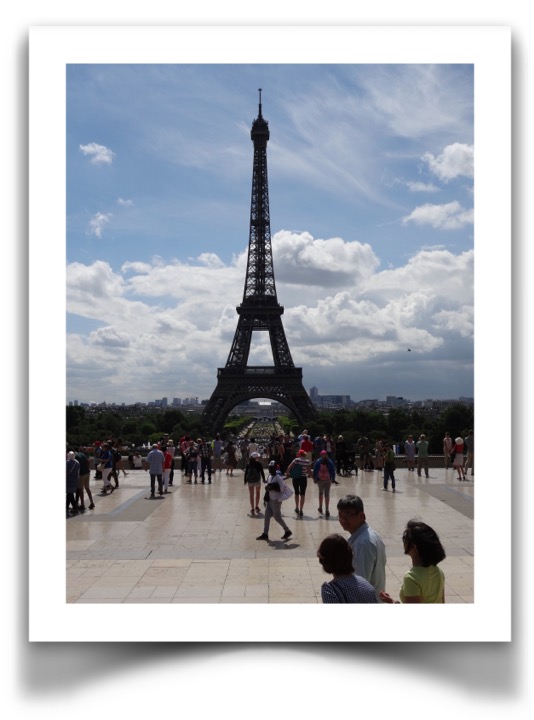
We buzzed around Paris in our coach, past the Louvre and the Tuileries Garden, north to the Paris Opera House, hearing tales of some famous architect or other, about a minor Napoleon’s private entrance at the back of the building, and about all the famous designers and models who had been seen at the opera. Christine was very fond of designers and models, and this was not the last we were to hear about them. We saw the Invalides in the distance, the palatial golden “resting place” of Napoleon, quite large for such a little man, and we finally stopped again at the Place du Trocadero for a spectacular view of the Eiffel tower directly across the Seine. From there? A quick buzz along Boulevard St.-Germain, whipping past a few famous cafes as we headed back to the hotel.

Ah! But what a struggle it is to write about Paris! It becomes a list of monuments and museums, a description of parks and buildings. They’re beautiful, they’re magnificent, but who cares? The power, the attraction of these places for me is not what they are, maybe in some cases what they contain, but especially what happened there. The interior of Notre Dame is a dead place until you realize that you’re standing where Napoleon stood. Where Jacques Louis David, the great Neo-Classical painter, observed and sketched the Coronation. And who else? Who else stood there?

Not far from Notre Dame, Pont Neuf straddles the river, about as famous a bridge as one finds, a bridge painted by Renoir, and referred to frequently by Hemingway. And Hemingway? Across the river also is the Latin Quarter. Is “Shakespeare & Co.”, the bookstore of ex-patriot era lending librarian Silvia Beech, who first published “Ulysses” for James Joyce. The apartment of Ernest and Hadley. The “lions” of that era, the painters, the Gertrude Stein crowd, this is where they were, this is where they hung out and worked and wrote and socialized and promoted themselves.

Shakespeare and Co.And that’s what I wanted to see, that’s where I wanted to go, that’s what I wanted to write about.

And I shall. Soon.

—Christo


Three Days in Paris (Partie deux)

🇫🇷 The Great France Art Tour of 2017

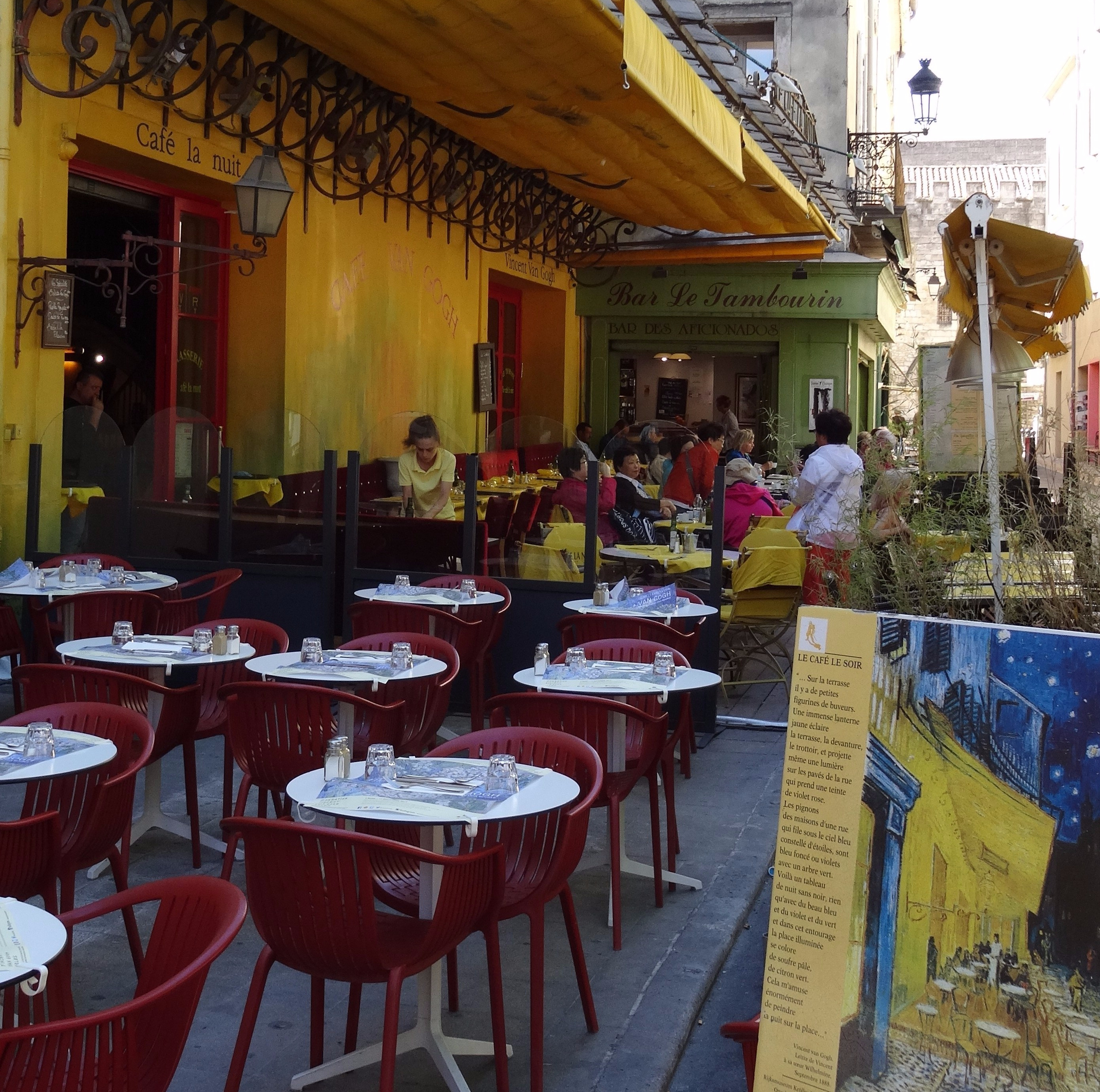
VanGoghs_YellowCafe_inArles

…continued from Three Days in Paris (Partie un)

You may know that the French were reputed to be smoking fiends until the last ten years or so. Just watch a French movie. They ALL smoke! Historically they had their “national brands”, the blonde Disque Bleu and Gauloises cigarettes, strongly aromatic and somewhat similar to the much milder American plain end “Camels”. I had smoked Gauloises when I first visited Paris. They seemed cool then. But I was fifteen.

Then there were the “Gitanes”, of many types, in my experience, made with black Belgian tobacco wrapped in slightly sweet tasting, yellow corn papers. I had tried a Gitanes just once after college at Lawrence and Pace Tobacconists. Those fat Gitanes monsters were a little squishy between the fingers,  smelled like a bad cigar, and were known for driving away mosquitoes and other pests.

At least the smoke wafting over from the nearby tables was not that!

A Bleu Memory

screen-shot-2017-10-13-at-9-15-36-pm-e1508449013423.jpg

It was 1978 and I was living in an extremely modest rented room near Harvard Square. In that dark room, the narrow mattress sagged nearly to the floor, which was littered with feathers and other debris of the pigeons that managed to come through the rafters at night. Why they came in? I don’t know, on that top floor it was ungodly summertime Cambridge heat and humidity, and there was no air conditioning. If I were a pigeon, I’d stay outside.

And we did. We stayed out as late as possible, those of us at the so-called “Lincoln’s Inn”. Waiting for the city to cool down. I’d watch a Fred Astaire double feature at the Brattle Theater, and then scrawl the exciting details of my new life in my journal at a table in a corner of the Casablanca coffee house. It was my first exposure to iced coffee, served there with a bit of Crème de Menthe and a dollop of whipped cream, it cut through the heat, and I could nurse one for an hour or two before they’d kick me out.

In the morning, I’d pull open the window screen and chase out the pigeons. And this was okay. I was fresh out of college with my degree in English, and was in no hurry yet to work as a teacher—which I felt was my destiny—or to go to graduate school, which might be required, and which I could not afford. I had managed to get all the way across the country from California, and I was pleased to have work in Cambridge. Working as a tobacconist seemed as good as any other job, and better than most.

Before the whole civilized world had quite sensibly turned against the cancer-inducing addiction, there was a certain romantic and literary allure to tobacco and tobacco products. Especially at “Lawrence and Pace”, which was known to have been the preferred local source for a number of current and historical celebrities who attended or visited Harvard. There was the Perkins shop in Boston, and Ehrlich’s too, on Tremont Street, but those were the domain of business men, old men. They didn’t have the hip Harvard Yard cachet of “L and P”, a living museum of Harvard sports and its own tobacco history collected in framed and yellowed news clippings, articles from Time to the New Yorker, and a tremendous collection of other ephemera. Plus, we benefited from the living book of colorful local characters who came and went, revealing their own stories or narrating the tales of others.

On an August afternoon, our Assistant Manager, Thomas, persuaded one of the local Cambridge “boys in blue” to sample a blue-boxed French Gitanes cigarette.

Bill stepped off the street into our air-conditioned store to escape the swampy New England summer heat. He was about 6’5”, a large slightly paunchy man in his late thirties with a pencil-thin black mustache. He walked the Harvard Square beat in shiny black shoes, with a holstered billy club, the usual blue uniform and a blue hat, tilted back. It seemed too small for his slightly bald, large, round head. He was mostly known for writing parking tickets and harassing the many buskers and pan-handling street people who hovered around the Red Line T- stop like yellow wasps circling a glass of Burgundy. He occasionally purchased Newport menthol filters, and not many of those, and this day, made the mistake of telling Thomas he would like to try a different brand, something “more interesting”.

Thomas turned on the charm, the whites of his bulging brown Peter Lorre eyes flashing. He described the romance of “the continental” cigarettes, peppering his spiel with French, German, and Spanish—all languages with which he had proven on previous occasions to be at least passingly familiar. Thomas loved to wax dramatic, and his show went on for 15 or 20 minutes. He pulled various brands in exotic boxes from the shelves, German “HB”, Swiss “Davidoff”s, even the weird papirosa Russians. He took one of those, crimped the long hollow “filter” at the end in the proper manner—pinching it at right angles—occasionally taking a puff from it, but mostly using it as a pointer. Six or eight different boxes lay on the counter top.

French Cafe Saucers

Thomas lifted his thick dark eyebrows dramatically as he painted a picture of the Paris scene of the 1920s—which of course included brilliant ex-patriots smoking Gitanes cigarettes as they piled up the color-coded café saucers on the tables where they wrote their stories or poems. (Of course L&P had facsimiles of these props as well, used for ash trays.)

In the end, Bill selected a blue pack of Gitanes, pronouncing the name, “Gee-tanes”, tapping his finger on the box. I watched in horror as he opened his wallet. Thomas took Bill’s money at the register, closing the deal with the explanation, “The French pronounce it softly, ‘Gee-tawn’,” then added his usual overly affected, “If you don’t like the cigarettes, bring them back and I’ll refund your investment. Bon appètit!”

(And yes, he did say, “investment”.)

Bill walked out the door.

There were no other customers for the moment and it seemed very quiet. I shook my head. Thomas leered his crocodile smile, glancing at me, sighing and leaning forward as if exhausted from his efforts, resting his arms on the glass top of the display case of hand carved meerschaum pipes.

He was smug. Laughing slightly, he said, “I think he’ll like those, but his buddies at the station house may not want him nearby!!”

Only moments later, Bill pushed his large frame back through the shop’s heavy front door, one huge hand wrapped around the door handle, clinging to it as if he needed the support to keep from collapsing. Like many of the furnishings at Lawrence and Pace, the door handle was unique, silver metal cast as an oversized briar pipe. At first, Bill just stood there. Even from across the store, in the walk-in humidor where I was stocking cigars, I could see the pained look on his dark green face.

Bill blurted, “I’m going to be sick…” and Thomas quickly escorted him back to our washroom, left him there, and came out to get him a glass of water, explaining, “The Gitanes were too much for him.”

Thomas’s eyes twinkled a bit. This had been his little joke, but things had gotten out of hand, and he quickly adopted a compassionate pout; he had not intended to hurt our friend and customer.

When Bill emerged, he was sheepish about the incident. Thomas refunded Bill’s investment and spent the next few minutes apologizing for overselling the smelly dark cigarettes.

For his part, Bill politely refused Thomas’s offer of more advice and a complimentary box of some other brand, explaining that he was now quite seriously quitting the dirty habit altogether. He was, he said, done with cigarettes, forever. “Nothing personal guys,” he proclaimed, regaining something of his normal commanding composure, “Newport, Gee-tanes, Gee-tawn, whatever. I’m done.”

— And I have to say, that although Bill still dropped in to the shop to visit once or twice a week, to my knowledge, he never smoked another cigarette, or consumed any other type or form of tobacco. In the end, for all the romantic expectation and comic drama, some good did come from that particular pack of Gitanes.

Gitanes_cigarette_pack

To be continued…

— Christo

Three Days in Paris (Partie Un)

🇫🇷 The Great France Art Tour of 2017

Notre_DameTuesday

The coach lurched along from airport Charles de Gaulle past many Paris streets and squares that I thought looked familiar but probably were not. We caught a glimpse of the Eiffel Tower briefly, before the tall buildings and streets of Paris swallowed the open sky. That sounds nice. Actually, we arrived quickly at the east end of the Seine River, several long blocks below Notre Dame, near Bercy. Considering every moment in Paris precious, and anxious that we not waste any, I checked our halted progress via GPS on the “Ulmon City Maps To Go” app on my iPhone.

I could see that our relatively direct trip had stalled completely in the insane morning traffic as our off-ramp merged with one or two others, plus four lanes from various feeder streets. Every bus, auto, cab, and motor scooter, wherever it was coming from, seemed intent on getting to the other side of the stream of cars in front of it, where we were ALL headed. Caught up in the excitement of the streets of Paris, our travel cohorts were oblivious to the delay, except Donald. He was obsessed with the rising temperature inside the almost-stationary, sunbaked coach.

“Air Conditioning!!” He shouted repeatedly to the bus driver, “Air Conditioning!!”

Need I say he included no, “S‘il vous plaĂŽt.”

“Air Conditioning!! Turn on the air conditioning!!”

The AC came on. I heard no one, except myself, say, “Merci!”

Stopping and starting we made a few feet of progress at a time, taking about an hour to transit the single block to our hotel.

The Hotel Bercy is a “modern” glass and steel “business hotel” with several fountains and a 15-foot-tall, bright red, muscular, caped, male superhero statue in front. I could speculate, but I have no explanation for this statue. It was just there.

The female receptionist at the hotel was young (in her twenties?) and attractive with long straight brown hair, a smart suit, and dark, spiked heels—stylish enough to appear on the cover of Vogue or the New York Times Women’s Fashion magazine, although maybe not quite starved enough. This was true of all the women coming and going in the lobby. Not just the heels that is, but the stylish and attractive part too. Yes, we are in Paris.

The men? Oh, they are all thin, though not underfed, well groomed. Fortunately, very few sport the time-consuming, face-covering, trendy, hipster beards seen in parts of the USA. If these men have beards at all, they are close-cropped stubble that gives depth to their chiseled chins. The male hotel staff wear suits. Male businessmen wear typical European business attire: jeans or slightly more formal trousers, lined or solid (sometimes button-down) dress shirts, and dark leather loafers often without socks. Most wear sport coats, which in France are narrow sleeved, snug fitting jackets, the lapels held together with one button.

Nobody but the tourists, wear sneakers or running shoes. (Donald, blinding, in his bright white sneakers and bleached white socks halfway up his calves, steps off the coach trailing a wave of cool air.)

No sneakers, and thank goodness, no ties. Maybe the maĂŽtre d’ hotel and the bartender wear ties. But otherwise, no ties. I don’t like ties.

Unfortunately, there is plenty of time to observe the lobby, because our rooms are not ready.

I consider the possibility that we do not actually have rooms, but we are assured the rooms are there, the Hotel Bercy is just behind schedule with cleaning. Way behind.

Several times the Front Desk receptionist walks over to our group, sprawled awkwardly on the artsy, cube-shaped chairs and couches. We rise. She hands Steve a too thin stack of envelopes with keys and room numbers. Steve reads the names and hands white envelopes to the lucky winners, who quickly leave to get settled in their digs and enjoy what was left of our “free” day. The lobby emptied a few people at a time, in this manner, the process repeated over and over.

We waited for hours. And we were, yes, the last, the very last to receive our room keys.

Before the eventual delivery of our envelope, Christine walked those of us remaining over to the charming, tree-lined Bercy Mall for a quick tour. Bercy had once been an industrial bakery, and has the red brick charm of very old buildings, but all the swag and glamour of a trendy destination for young business people and tourists. We noted the location of a small local grocer, the local ATM, the soon to be recognized as ubiquitous “artisanal ice cream” shop, and strolled along the partly shaded pedestrian promenade lined with tables and umbrellas that front the many bars and restaurants. We saw designer shops, stores with special French candy packaged in French art tins, a Surf store with surfer shirts, skateboards, and yes surfboards for sale and on display in the windows. Is Bercy near the beach? Does Bercy have quick access to mysterious Mediterranean swells? Is there an Internet “Surf Report” available for Bercy? “No,” would be the answer to these questions. (Nevertheless, I was drawn to the Surf shop, more than once, to peruse the shirts and board shorts.)

Christine escorted us down the escalator to the Metro. She provided quick tutelage in the basics of ticket purchase, the various lines, maps, and other arcane knowledge required in the underground. Important but not important, the “Purple Line” as we might call it in Boston, is not the “Purple Line” in Paris. It is the “M 14” between St. Lazare and Olympiades. But on all the maps and signs it is purple, so I called it the “Purple Line”, which was usually fine as long as we remembered we wanted to go to “Olympiades” to get back to Bercy. The ticket machines may challenge, especially if you use a credit card, but otherwise (from previous Franco-adventures), I considered myself fairly adept at Metro use. (A notion disproved dramatically a day or two later).

We popped back into the daylight upstairs, abandoned Christine and tour group to fend for ourselves in Bercy, searching for a place to lunch, and eventually settled at a little outdoor cafe. We sat next to tour manager Steve, and his wife Karen. After ordering salad for Deb, croque-monsieur for me, and two glasses of rosĂŠ of course, we got to know our tour hosts a bit.

A university academic, Steve, though well-versed in Literature (and an exemplary English Major), holds a PhD in History, the subject he teaches. Karen has a consulting business where she is engaged in multi-year research and writing projects. Their professions and interests allow for much international travel, which they have done with Arawho for years.

We enjoyed the relaxed meal and conversation, and I tried to remember what I had learned from the Rick Steve’s podcast about French restaurant protocols:

  • The wait staff generally leave you alone, for hours.
  • When you want the bill, DO NOT shout, “Garçon!”
  • To get attention, make eye contact.
  • They will come over.
  • Generally, do not tip, but ask if the check includes a service charge.

(This part is a little complicated at first. I’m sure we tipped when we should not have and vice-versa. By the end of the trip I was pretty clear about how it all works, but writing now I can’t recall well enough to explain it. Sorry. Listen to Rick Steve.)

The clouds and rain moved in, and I gradually became bothered by the drifting cigarette smoke from the tables of other diners. This was odd, I thought, the smoke, because although I had expected the worst on my last trip to Paris, in fact I had experienced very little exposure to second hand smoke.

You may know that the French were reputed to be smoking fiends until the last ten years or so. Just watch a French movie. They ALL smoke! Historically they had their “national brands”, the blonde Disque Bleu and Gauloises cigarettes, strongly aromatic and somewhat similar to the much milder American plain end “Camels”. I had smoked Gauloises when I first visited Paris. They seemed cool then. But I was fifteen.

Then there were the “Gitanes”, of many types, in my experience, made with black Belgian tobacco wrapped in slightly sweet tasting, yellow corn papers. I had tried a Gitanes just once after college at Leavitt and Peirce Tobacconists. Those fat Gitanes monsters were a little squishy between the fingers,  smelled like a bad cigar, and were known for driving away mosquitoes and other pests.

At least the smoke wafting over from the nearby tables was not like that!

Screen Shot 2017-10-13 at 9.15.36 PM

To be continued…
— Christo

Newark to Paris

🛫 The Great France Art Tour of 2017

MondayEiffelTower

We departed Newark airport on a regular and frequently used Delta flight, leaving in the late afternoon. I was familiar with the routine. I had taken many similar flights to Frankfurt in 2015 to participate in the slow motion collapse of my career at the conquering and unappreciative German pharma and chemical giant, Merck.

Summer air travel has a reputation for delays, but passing through airport security with the “TSA Pre” checkmark on my electronic ticket was quick, even with the pat down I received when a sensor set off an alarm for no apparent reason. (After running his hands down the inside of my legs to my ankles, the TSA agent waved me through without comment. Despite my opinion to the contrary, my package is apparently not that notable!)

But that unbelievably long walk to the very last gate, then sitting, sitting, sitting through the noise and bustle, passengers gushing forth, crews leaving, arriving, checking in, and so on, until you can’t take it anymore, and instead of grumbling or screaming, you get up, walk around, find another seat– blah! Time spent in the terminal is tedious! Writing about it is nearly as tedious as the real thing–which is why we should skip it–and so we will. When I retype this, perhaps a heavy edit can reduce it to a line or two? Or maybe nothing?

Got on the plane.

Deb had upgraded our economy tickets to “Delta Comfort”, which guarantees ‘Overhead storage’ and an additional 6 inches (who wouldn’t want that?). If you have flown at all in the last 20 years, you know that besides the seat shrinkage issue, nobody wants to check their bags. Every passenger is in an ugly rush to get on board as quickly as possible to stow his bag overhead, preferably over his own seat, before anyone else usurps that valuable location. Failure means finding overhead space back—toward the tail of the plane—the worst place for your bag to be after the plane lands and everyone is surging and shoving ruthlessly to the front to get God-knows-where, but definitely off the plane, past you. In that unlucky situation, you’ll likely have to wait until the plane is empty–or if you’re lucky, if someone further back has the same situation and manages to stanch the flow of the herd long enough for you to make a run against the stream and grab your bag. If you have endured this ordeal in the past you will appreciate the “Delta Comfort” guarantee that your luggage, and only your luggage goes in that special place.

💺Hooray! We find our seats (with the six extra inches), stow our bags overhead and get settled in.

Moments later, directly across the aisle, a middle-aged, clean shaven, blond guy in a guayabera and shorts starts cramming and shoving and moving his bag, and another bag that is already there, grumbling, and trying to slam the hatch on the bag that is clearly and obviously too big. I think this is his bag. He sighs loudly and grumbles loudly to the person next to him (who is his wife, trying hard to pretend that he is a stranger to her). He rearranges the bag with much slamming and complaining and sighing and noise. Deb and I both glance his way with the same thought, at the same time, and yes, tied to his bag is the same yellow Arawjo Tours tag that identifies our bags. We turn face-to-face at the same instant, with the same horrified look of recognition. This is the man we shall call “Donald”, who will be spending the next ten days traveling around France with us. Need I say, we do not introduce ourselves.

On the plane they feed us. Better than no food, by my account anyway. Deb has standards for food, the main one being that it is actually food. As opposed to chemicals and sugar variants. She leaves the butter, bread, cookies, chocolate, and other suspect quasi-food items on her tray. I follow her lead sometimes, and other times over the next five hours, I eat the butter, bread, cookies, and chocolate. Although our special “Delta Comfort” seats entitle us to alcoholic beverages, neither of us drinks alcohol on the plane.

We watch movies. It’s a chance to watch something, not as a couple! Violent Jason Bourne movies, stupid super-hero movies, sexy vampires, for me these are the things that are best watched with your children, but not usually, with your life partner. I happily indulge in a movie I have been anticipating for awhile, the latest Wolverine movie: “Logan“. Although my reputation as the “non-exemplary English Major” plus my ability to recite the Green Lantern’s oath, is well-known, the truth is, I never read Marvel comics until I was an adult.

I was much more fond of DC’s Superman, Batman, and yes, the Green Lantern, than of Marvel’s “X-Men”. The X-Men were difficult to follow, with their multitude of mutational powers and Marvel’s penchant for endlessly serialized stories. Heck, when I spent 12 cents, then 15 cents, and eventually 25 cents for a comic, I wanted a story and an ending, not a soap opera of agonizing super-hero self-examination and drama that only moved the story along a smidge and compelled me to buy the next issue! Criminy.

Nevertheless, as an adult, watching with my pre-teen son, I came to enjoy the X-Men, mostly because of the movies with Patrick Stewart as “Doctor Xavier”. I especially liked “the Wolverine” (portrayed by Hugh Jackman) with his Dorian Grey/vampire-tormented-by-immortality issues as seen in several confusing time-shifting films. So I was primed and ready for the new film, “Logan”.

** Spoiler Alert!! ** This one is more than a little dark. Really. Everyone gets killed. All the friendly helpful non-mutant civilians, Logan, and even Dr. Xavier. Snuffed. Not very uplifting;  true to the Marvel tradition.

The normal healthy person might sleep through the rest of the flight. That would be Deb. Without my CPAP I can’t sleep,  and though I have a portable unit, it’s too much trouble to break it out, even with Delta Comfort’s extra six inches.

The giant 747, 767, or seven-something-or-other-seven variant growled its way over the Atlantic all night—a night shortened by our Eastward travel toward the rising sun. Pushed by the Gulf stream and the heavy hand of our pilot, the plane touched down at Charles De Gaulle airport an hour early!!

Tuesday

🇫🇷 It was Tuesday morning in Paris. In heels, sporty trousers and a matching jacket, of medium height, middle-aged, with mid-length black hair on a round head, and a pleasant face with just enough makeup on her lips and eyes, our truly French guide, Christine, met us in the luggage area. We had shuffled through the long winding passport control/immigration line, and piled up, thirty-five tourists with yellow Arawjo tags on their bags, ready to take the coach to the hotel.

I took this moment to observe the full group: Mostly couples. One or two singles, both male and female. We are not the youngest. We are not the oldest.

But wait!! Where were the two round, blond ladies who introduced themselves as we snaked through the long immigration line?? Steve, our friendly and easy-going tour manager, (Who we met at Newark airport—but I cut that part of the narrative out, didn’t I?) gathers us together closer and after roll call, confirms the absence of the two indistinguishable blondes, who we begin to refer to as “the Bobbsey Twins”. “Donald” uses this pause to jump to the front of the line, dragging his wife behind him, a scene repeated throughout the trip.  We take a few anxious moments pondering the fate of our comrades, lost so early in the journey, imagining them waiting somewhere near a baggage carousel far away, staring at the portal over an endless conveyor that spews out suitcases and bags of all sorts, but never theirs, never theirs!  Interrupting this reverie, a sharp-eyed scout points them out, standing outside on the curb, shiny heads barely visible through a huge swirling blue grey cloud of their own cigarette smoke.

Led by Christine on a short march through the airport, picking up our delinquent charges on the way, we hop in the large charter bus. At last.

— Christo

✈️

A Non-exemplary English Major Claims his Crown

Summer 2017 Book Reviews

Green_Lantern

Thinking about a house in LA, lying in bed this morning at about 4 AM half awake and the color yellow seemed somehow important, because it had something to do with that house—maybe I remember the house as being yellow. Was it? Or maybe it was that the kitchen or the wall in that little nook was yellow, with the small table where we used to sit and drink coffee and talk with Doctor “Dick” Kocher, our favorite English Professor? I don’t know.

It was a dream. But then, there was some very complex thought in the dream about aging, memory, and the difficulty of communication, which I understood as my brain was presenting it to me (and isn’t this the grand tease of dreams? That as they are happening they seem so brilliant, and we seem so brilliant to be dreaming them, but when we return to the mundane “real world” and wakefulness, we can barely recall the substance, much less the brilliant detail of our brilliance.) So of course, I can hardly remember any of it now. It was a dream.

I had hoped to finish writing about my trip to France (“The Great France Art Tour of 2017”), but that is becoming one of those long narratives that will take a great deal of effort and probably time to complete. Nevertheless I am working on it.

Meanwhile, somehow it occurred to me that it might be of interest to share with you some of the books that I’ve been reading lately. As you probably remember, I have never been a very good reader, and have struggled to finish as few as eight books a year outside of technology publications. I am no idiot, but I am not the exemplary English Major. I’m proud of my friends and colleagues from my college days, who can spout off stanzas of Wordsworth and remember lines of Blake. Me? I can remember Green Lantern’s oath. “In brightest day, in blackest night…” whatever. I probably judge myself more harshly on this than anyone else, but I have decided it is time to catch up!

I am writing this using “dictation”. The Macintosh usually understands what I am saying—although I am not convinced that speaking is any faster than typing—especially with all the corrections. So pardon some non-standard formatting and punctuation, because I, claiming the crown of the non-exemplary English Major, probably won’t correct it all.


For these books I’ve lifted a few descriptions and blurbs to save a little time. (I will enclose these in quotations without the source. You may assume it’s the book description on Amazon.com, for which I have included a minefield of potentially income-generating links!)


Hillerman_Fly_on_the_wall_coverThe fly on the wall – Tony Hillerman If you enjoy Hillerman, you’ve probably read this one; it’s a pre-Navaho Police book, using most of his basic plot techniques, suspense, the ticking time bomb, etc., in this case using a journalist as a detective. Nothing great. “A good read.”

McBride_Good_Lord_Bird_coverThe good Lord bird – James McBride  A picaresque/historical novel, by this Award winning, African American author, it’s about a young freed slave who passes himself off as a girl, having many adventures, and ending up with John Brown at the raid on Harper’s Ferry. A book with an engaging first-person narrative reminiscent of Little Big Man or one of the Flashman adventures (of course, Flashy was at Harper’s Ferry too!). I confess I laughed aloud in a number of places. Deeply researched and historically accurate (for a novel), its humor is inconsistent—which is to be expected I guess, given the subject matter.

http://amzn.to/2gViFPEThe autobiography of Mark Twain – Samuel Clemens I imagine this is standard reading for all English majors, and I started it, but did not get too far. The Introduction to this older edition went on endlessly about Twain’s difficulty in writing it, finding his voice, all the variant releases, etc. In the end, I don’t care. It didn’t hold my attention. 

Moriarity_Horowitz_Cover

Moriarty – Anthony Horowitz Ever since my very good friend Anne gave me The Complete Annotated Sherlock Holmes I’ve been a Holmes fan. “The game is once again afoot in this thrilling mystery from the bestselling author of The House of Silk, sanctioned by the Conan Doyle estate, which explores what really happened when Sherlock Holmes and his arch nemesis Professor Moriarty tumbled to their doom at the Reichenbach Falls.” The author’s ability to impersonate Doyle’s style is fun, but I will not recommend this book. In fact, I say DO NOT READ THIS BOOK. The plot itself contains an annoying gimmick. Really annoying. Don’t bother.

LIfe_of_Pi_Martel_CoverLife of pi – Yann Martel I was looking for an ebook from my local library and this caught my attention: escaped zoo animals, survival on a boat. I did not see the movie, so I had no idea what I was getting into. It had that odd part at the ending, reminiscent of the Tin Drum, where the whole narrative is called into question and you wonder if in fact he was on the boat with the tiger and other animals, or really humans, and all that suggests about cannibalism etc.. But I enjoyed the adventure, back-and-forth narrative style, and the explanations of zoos and zoo animals throughout.

A_Month_in_the_Country_Carr_CoverA month in the country – J.L.Carr “Tom Birkin, a veteran of the Great War and a broken marriage, arrives in the remote Yorkshire village of Oxgodby where he is to restore a recently discovered medieval mural in the local church. Living in the bell tower, surrounded by the resplendent countryside of high summer, and laboring each day to uncover an anonymous painter’s depiction of the apocalypse, Birkin finds that he himself has been restored to a new, and hopeful, attachment to life. But summer ends, and with the work done, Birkin must leave. Now, long after, as he reflects on the passage of time and the power of art, he finds in his memories some consolation for all that has been lost.”

The above sounds like the parody of some overdone, silly romance. Really this is a beautiful novel, with a little mystery, a little romance, and a bit of information about restoration of old paintings. It seems as if it could easily have been written shortly after World War I instead of it’s actual origin, published in 1980.

Genius_of_Birds_Ackerman_CoverThe genius of birds – Jennifer Ackerman This non-fiction book supposedly reveals the recent discoveries about, and studies of, the intelligence of birds. Starts with the premise that most of us assume birds are just “dumb” animals. This assumption is a huge one, since at this point in history, most people have experienced—or at least are aware of—birds using tools, having complex communications, navigational abilities, and so on.

I have a prejudice against this book. Early on, the author labels quail “on the dumber side” of bird intelligence! Then she revels in the brilliance of a Chickadee chirping in different ways to communicate not just the presence of a predator, but of the proximity and type of predator. Those specific communications are exactly the kind that our quail Peep-sight used to share with the rest of the family to warn of a Red-Tailed hawk overhead, a snake in the bushes, or the dreaded basketball rolling in his direction.

If you like the sort of well researched tomes that explain scientific information for the masses, I suppose this book is okay. But I found myself going to “skim mode” for most of it because there’re just too many words about brains and brain development. Great insomnia cure.

H_is_for_Hawk_MacdonaldH is for Hawk – Helen MacDonald This  book was recommended by a few friends as another “bird adoption book” (since they are aware of my personal weakness for those – see Peep-sight ). I have started and stopped twice trying to read “H”. Written by a British woman who loves words. Lots of words. All kinds of words. Too many words. And it seems to be way more about her father and personal loss of family than about the bird…

History_of_Jazz_GioiaThe History of Jazz – Ted Gioia  An excellent, well written, and deeply thorough reference. It took me at least a hundred pages to get into this book. I love jazz and wanted to learn more about it. And if I were more patient, and it weren’t a library book, I might have finished it. But after 2 extensions, and trying to read fast, I stopped just when it was getting interesting – Be Bop and Cool Jazz. I could read more about that era, but I really don’t want to hear any more about Dixieland and Big Bands!!
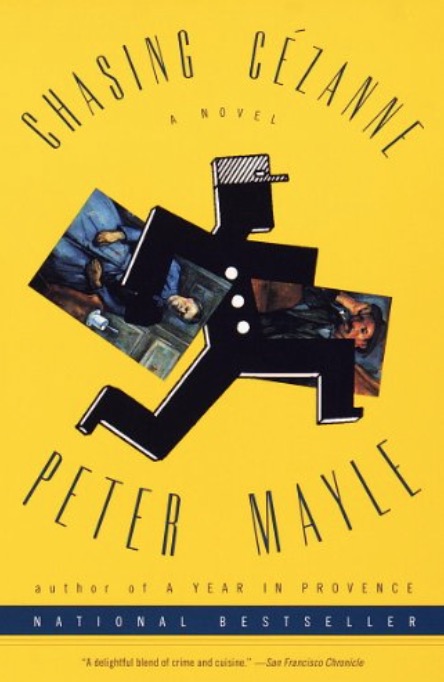
Chasing_Cezanne_Mayle_CoverChasing Cezanne – Peter Mayle A lightweight novel about art forgery from the well-known author of the non-fiction “A Year in Provence”. Fun reading because of the descriptions of the South of France (where I was going to be traveling). Coming over the high road on the drive to Monte Carlo, it was really a treat to know something about Cap Ferrat sitting on the azure sea below.

Year_in_Provence_MayleA Year in Provence – Peter Mayle  I enjoyed reading a chapter or two of this non-fiction book, but it was an ebook from the library, and the system kept crashing and making me re-download it. So I will use inconvenience as my excuse for losing interest.

Rock_With_Wings_HillermanRock with Wings – Anne Hillerman  No matter how much we want this author to bring back Jim Chee and Lieutenant Leaphorn after her father’s death, it just isn’t happening. Now we have Chee’s wife, Manuelito, and her annoying sister, and aging mother who take up most of the book. Ms. Hillerman put a bullet in Leaphorn’s head in her first “comeback” novel and the poor Lieutenant may never completely recover – saving her the challenge of making him a decent and reliable character, or one that she ruined. Poor Chee is even more of a boob than he was in the past. I finished this, but I don’t think I’ll read another.

Master_and_Commander_O'BrienMaster and Commander  – Patrick O’Brien  My college Professor Dr. Kocher is probably thinking, “Why in God’s name haven’t you read any of these Royal Navy sailing books by now??” And I don’t know. My brother has read all twenty and been pestering me for years to try one. The only thing close I have ever read is Moby Dick. Master and Commander is wonderful storytelling with interesting and likeable characters, although the depth and vocabulary of sailing knowledge is a bit daunting. I looked up a lot of references and skipped or relied on context to understand the rest. There are twenty of these?? I may tackle another one some day.

https://images-na.ssl-images-amazon.com/images/I/518Njq32XkL._SX322_BO1,204,203,200_.jpgThe Return of Little Big Man – Thomas Berger  Another “picaresque”. After absolutely loving Berger’s Arthur Rex, I was sorely disappointed by his muddled Teddy Villanova hard boiled detective spoof. But somehow I had missed that he wrote a sequel to Little Big Man! I found this in the used book sale at the library, and read a Kirkus review before starting it, just to lower my expectations. (It actually got good reviews.)

I haven’t read Little Big Man in thirty five years, but remember really liking it. This book picks up from the original, explaining how Jack Crabb could come up with more narrative (since he was over a hundred and presumably near death in the last one). What a pleasure to read! We spend a little time with Wild Bill Hickock, and more with Buffalo Bill and Annie Oakley, and near the end, as much as I want to keep reading, I want to slow down because you just know things are not going to end well for Jack’s friend Sitting Bull. I especially enjoy Berger’s ability to put us into the first person narration of Jack Crabb, who in turn, expresses so well the “different” way in which Indians see things. This book is a gem.

Murder_of_Sonny_Liston_AssaelThe Murder of Sonny Liston – Shaun Assael I’m slogging through this book, which has its moments, but is mostly pretty dull and poorly written. I am a captive audience though, because Assael is writing about the time when I lived in Las Vegas—the 60’s and 70’s—when in addition to the Mob, we had Nixon, Spiro Agnew, and the Beatles visit our city. It’s kind of a shock to me that I never realized that the casinos were SEGREGATED. But then again, I never went to the casinos. He writes a lot about “the race riots”, which I vaguely remember in my mainly white Las Vegas school as fights between ten or fifteen kids of different colors, completely overblown by the press and school administrators. He doesn’t mention what I always thought was the main cause, the abrupt de-segregation of schools by busing, with little preparation or sensitivity, and on all sides, our ignorance and inexperience with people who are “different” which created fear and tension. We’ll see what happens. But I’m pretty sure Sonny Liston is going to be murdered.

And for now, that’s all she wrote!!

— Christo

Paris to Avignon

The Great France Art Tour of 2017

🇫🇷 Matisse, Cezanne, Chagall? Matisse, Chagall, Cezanne? I don’t know. Who lived where? This was “The Great France Art Tour of 2017” (my title, anyway) and those guys, those guys confuse me!! Monet? No problem. And well, to be sure. I am good with Van Gogh anyway.

Field of Sunflowers in Avignon
Van Gogh’s presence was there on the TGV as we rocketed south across France, starting in Paris in the North from the dirty and rundown Gare de Lyon. We left the Pullman Bercy Hotel on time, but the horrendous Paris traffic gave us a few tense moments—our French guide Christine, skeptical of the route, gently exchanging comments with the coach driver who was quite sure his way to the station would get us through the traffic lights, bicycles, scooters, narrow streets, buses, and awkwardly parked delivery trucks that line the Bercy back streets like so many hazards in a Disneyland adventure ride, pulling into our lane unexpectedly and getting out of the way just in time to let us pass. Sure enough, we rolled in through the grimy Gare de Lyon entrance gate a few minutes sooner than expected and parked the coach.

Christine had warned us of the tight departure schedule, and told us more than once that she had previously arranged for a team of porters to transport our bags from coach to train. But upon our arrival we received a quick reminder that this was FRANCE after all, and the porters, not to be seen, were all “on break”, ALL, and they gave not a whit for any pre-arranged special compensation that may have been negotiated to enlist their assistance with bags! One might think, “Well, let’s find them, and make them help!” But Christine was clear on what was needed, and what was now possible and advised us, “Take your own bags”.

We men, being men, arranged ourselves around the sides of the coach and quickly unloaded and distributed the bags, each to his friend, partner, or spouse first, then passed along if unclaimed to someone further down the line until every bag had an American tourist clearly attached to it. Then following Christine, dragging our rolling bags on the old concrete, some cobblestone, brick, and then onto the tile floor of the station, we formed a clump, prepared to dash to the gate, to the platform, and to the waiting car.

But once again our anticipation and plans were trounced by the real world, where, on the confusing electronic light board above the gates, our train was clearly not present. As commuters the world round are aware, you can’t—or shouldn’t—run to the gate until the proper authorities have identified at which gate your particular plane, train, or automobile will be boarding. And so our clump stayed clumped waiting amid similar clumps, until the proper train and destination—Avignon—flashed onto the board along with its gate, at which time we all rushed, to the growling resonant rumble of hundreds of small plastic wheels attached to many rolling suitcases, onward to our reserved section of a single long passenger car.

Our tour group discovered, (though having traveled on the TGV before, to me this was no surprise) that the TGV car has a relatively small luggage section with a rack at each end. In addition, there are overhead storage areas suitable for small bags, outerwear, etc., and in the comfortable seats, netting for water bottles, notebooks, and so on. This would have been fine for Deb and I, who had packed light with only carry-on bags for the entire journey. For our accompanying troop of thirty-five Americans from Bethlehem, Pennsylvania though, most with multiple enormous suitcases – these more the size of steamer trunks, some as large as dumpsters, and one or two which could have passed for cargo containers – the very limited luggage racks proved a challenge.

Again “the men”—of which, after completing the previous muscle-and-testosterone bag lifting challenge, I was moderately pleased to find myself still included as a member—passed the bags down the aisle like a fire brigade and piled them high at the far end of the car. The colorful, unruly stack rolled and heaved slightly as the train began to pull out, threatening to collapse on the heads of a Chinese couple and their elderly parents, one of only a few passengers not from our American Band, who dared to push through, and seat themselves among us.

For our entertainment and serving as a distraction from the loud and obnoxious Bethlehemians, in the middle of the car, across from us, and safe from the impending avalanche, sat les petit Francaise, two adorable little boys with young, attentive parents, in seats arranged as a booth, the four facing each other with a table between. The French parents were occupied with their French lives, reading French magazines, and occasionally offering French crackers to their French children. They never looked at nor acknowledged us. Except that is, for the youngest boy, maybe two years old, with a head of thick brown hair and cerulean eyes, who flirted incessantly with Deb, looking directly at her with his disarming smile. Eventually I had enough, growled at him and mouthed, “Le femme avec moi!” But other than this small conflict, you would never know from their non-chalance that these four natives were sitting in a car with a large group of noisy and rude Americans (along with four doomed Chinese).

Wisely, the Chinese got up to leave, shoving their bags, and anyone in their path, closer to the exit, long before we arrived at our first and only stop, Avignon. And after they left, to the audible racist commentary of one of our group (who we nicknamed “Donald”), the fireman’s brigade was hastily re-assembled to unload our bags onto the platform as quickly as possible, with Christine, smiling occasionally, grimacing more, as she chatted up the conductor, standing halfway in the train, and half on the platform, to prevent, she hoped, the departure of the train before we had completed our task.

This done, we rolled down the long bumpy concrete ramp into the dry heat and bright Southern sun of Avignon, with its expansive deep blue sky and bushy olive trees, a sharp contrast to the noise, bustle, grime, and overcast skies of Paris left behind. In a way the dry air and energy-sapping heat reminded me of Las Vegas, the Nevada desert—not the neon and all that casino glit and garbage—but the comfortably arid climate, to me, so welcoming.

I had started this commentary with Van Gogh in mind. Why? Avignon, Arles nearby have much history with Vincent. And from the speeding TGV, its tall long windows displaying the blurred countryside—many green fields, dirt roads, telephone poles, a few giant electricity generating windmills, red tile rooftops of homes in an occasional ancient farm village with a tiny castle tucked into a hillside, gradually transitioning into yellow, then orange fields of sunflowers blotted out quickly by more green, more sunflowers, then roads, then the fuzzy blur, purple now, lavender in fact, fields of lavender, then more yellow, orange, sunflowers until we are no longer awed, we were de-sensitized, this was mundane, the orange, the vast fields of sunflowers stretching left and right and swallowed by green hills in the distance, marked by tall cypress, and then, I don’t know, we were almost there. The train was slowing and the city and old medieval structures and Rhone River came into view and we had to gather everything and prepare for our exit.

— Christo

🌻 

Now there are THREE!! All William J. Plummer books now available as ebooks.

Friends, students, and colleagues who have known me for many years might know I grew up in Las Vegas, they might know I raced dirt bikes, hitchhiked up and down the West Coast, and teach T’ai Chi. But very few are aware of my upbringing with a pet Gambel’s quail and “an unusual household of pets”, described in some detail in books that my father wrote and that were published with moderate success and fame, in the early 1970’s. Curious? Well, here’s your chance!

ALL THREE of my dad’s books, previously published by Henry Regnery Company, and out of print for about thirty years, are available in ebook editions from Crossroad Press at select online publishing locations (see links below) for a very reasonable $3.99 each. IMAGINE owning all three of the complete and enhanced electronic editions for less than $15.00!

Enlivened with newly updated photographs — In addition to all the functionality of ebooks (searching, syncing bookmarks across devices, touch access to definitions, and so on), all three books have been updated with a new “Meet the Author” biography, a preface to the ebook edition, and improved photographs (in some cases never before seen.)

A_Quail_in_the_Family_thumb

In A Quail in the Family, the pen illustrations of the Regnery paper edition have been replaced with beautifully scanned and cleaned versions of the original photographs from which they were derived.

Friends_of_the_Family_thumbFriends of the Family features similarly replaced photographs. And because the quality of some of the photographs was so bad—I mean the ones I took with my Kodak Instamatic when I was…twelve—I have added public domain photos of several of the animals from the stories. (Thank you Wikipedia and all contributors of public domain photos!)

Five_of_a_Kind_thumb

Five of a Kind in the book edition contained ample photographs of the “Five Ladies”, but some were grainy, and all in black and white. Now, all have been replaced with improved scanned versions, many in color!!

Links to the ebooks:

Amazon Link to Kindle Books by William J. Plummer

Apple link to Audiobook by William J. Plummer

Here’s my promotional blurb for “Friends”, which should give you a pretty good idea of what all three books are about…

Friends of the Family by William J. Plummer—Re-join the Plummers, who adopted and raised “Peep-sight” the Gambel’s quail rooster of A Quail in the Family. In this second book, William Plummer describes the family’s adventures with birds, rodents, snakes, lizards, and other animals–the visiting and resident members of the Plummer menagerie in Las Vegas. We learn of the rescue of “Beverly” the Desert Tortoise from the Nevada Nuclear Test Site; playing “dogfish” with “Georgia” the beagle; “Squeaky”, a kangaroo rat who occasionally left his open cage to make nocturnal household explorations, and “Ellery” the caiman–who resided for a time in his own backyard pool. And we first meet “Carrie”, “Rose”, “Red-Leg”, “Pearl”, and “Brownie”, the five charming female quail whose complete tale is told in the book Five of a Kind.

UPDATE: Thursday, December 15, 2022 – My father, William J. Plummer, passed peacefully on December 5, 2022. He was, as he might say, “Going on ninety-six.” I’ve updated the links to his Amazon Author page and the Audiobook of “Quail” on this page. There’s also a “Quail and Friends” web site where I hope to add some of Bill’s unpublished stories—and maybe a few of my own—in 2023.

PEACE OUT

—Christo

“Time for Little Gas Crisis…”

Leak Pressures Consumers as Local Pipeline Oppositions Build

The Colonial Pipeline sprung a leak, spewing gasoline, causing long lines at gas stations and price increases at the pump from the Southeast to the East Coast for over a week. The leak also provided the petroleum industry an opportunity to emphasize how important pipelines are to keeping gas in your tank and prices down. And darn it, we need those pipelines, and new ones too, and those pesky “protestors” are in the way!!


“You certainly can’t build any new infrastructure, because people are protesting against it,” said Barbara Shook, a senior reporter for Energy Intelligence.

She said attitudes toward pipelines in general could be affecting energy resilience.  

“A lot of our infrastructure is old, and getting it repaired is difficult because you have so many protestors who just want us to abandon all our infrastructure,” Shook said. “I guess we’re supposed to walk from Texas to New York now.”

—Marketplace, Sustainability Desk, A Single Pipeline Leak Slows the Southeast , September 19, 2016


Thanks American Public Media “Marketplace” for this ridiculous statement of oil industry propaganda. Could you guys at least try to remember that old concept of  “journalism” or “media responsibility”?  Would it be that difficult to just ask, “Does it make sense to use the term ‘energy resilience’ when talking about fossil fuels?” Or, “Can you provide details about protestors preventing the repair of existing infrastructure?” But no, just broadcast it verbatim. Sheesh.

Why not cover the real story? The petroleum industry is making a last ditch land-grab to connect a national pipeline network. The network, if completed,  will allow them to move, market, and export petroleum products—including fracked natural gas—which is too expensive to export with existing means (refer to Marketplace’s own pipeline promoting stories about petroleum in rail cars, safety, fires, explosions etc.) If they can get away with it, the corporations rely on “eminent domain” to trample the rights, property, regulations, and natural preserves of individuals and states that would otherwise never allow it. We’ve all heard now about the Dakota Access Pipeline and the Standing Rock Sioux water protectors. What is less known, similar pipeline battles are occurring elsewhere in the US, including the controversial “Penn East Pipeline” in Pennsylvania and New Jersey.

So, how fortuitous for a price-bumping gas pipeline leak to affect so many people and garner press attention right as the Dakota Access Pipeline is on the front page of most news outlets! Seriously? Doesn’t this sound even the least bit like a Chris Christie “Bridgegate” job?

“Time for a little gas crisis!”

#StopPennEast

#NoDAPL

—Christo

These links open in a new window:
Oil Train Traffic is Down – for Market Reasons
Will the latest oil-train fire make people rethink anything?